Sacred Teachings
Discover the timeless wisdom of Bhagavad Gita, the nectar of Srimad Bhagavatam, and the transformative practice of Bhakti Yoga as illuminated by Krishna Premarupa Dasa.
Core Spiritual Teachings
Krishna Premarupa Dasa's teachings are rooted in the eternal Vedic scriptures and the living tradition of Gaudiya Vaishnavism as carried forward by His Divine Grace A.C. Bhaktivedanta Swami Prabhupada.
The Bhagavad Gita — Song of God
The Bhagavad Gita, spoken by Lord Sri Krishna to His dear friend and devotee Arjuna on the battlefield of Kurukshetra over 5,000 years ago, stands as the crown jewel of Vedic literature. Krishna Premarupa Dasa has dedicated over three decades to studying, teaching, and living the principles contained within its 700 verses across 18 chapters. His approach to Gita study is distinguished by its extraordinary depth of scholarship combined with warm, practical, and accessible presentation.
He has conducted over 2,000 systematic Bhagavad Gita seminars, each chapter receiving detailed, verse-by-verse exposition that illuminates the original Sanskrit, Srila Prabhupada's authoritative commentary, and the insights of previous acharyas in the disciplic succession. His series on the Bhagavad Gita has been attended by over 50,000 students across multiple countries, and his recorded lectures have amassed millions of views online, making the timeless wisdom of Krishna accessible to a global audience.
Central to his Gita teachings is the understanding that the text is not merely a historical or philosophical document, but a personal message from God to every sincere seeker. He emphasizes that Arjuna's dilemma on the battlefield represents the universal human condition — the struggle between duty and desire, knowledge and ignorance, the temporary and the eternal — and that Krishna's instructions provide the definitive solution to all of life's challenges.
Srimad Bhagavatam — The Beautiful
The Srimad Bhagavatam (Bhagavata Purana), described as the "ripened fruit of the tree of Vedic literature," holds a place of supreme importance in the Gaudiya Vaishnava tradition. Krishna Premarupa Dasa's multi-year Bhagavatam study program is considered one of the most comprehensive and transformative educational offerings within ISKCON today.
His Bhagavatam classes are legendary for their scholarship, emotional depth, and practical application. Each session weaves together the original Sanskrit verses, word-by-word translations, the commentary of Srila Prabhupada, cross-referencing with other Vedic literatures, historical context, and personal realizations — creating a tapestry of spiritual wisdom that captivates audiences for hours.
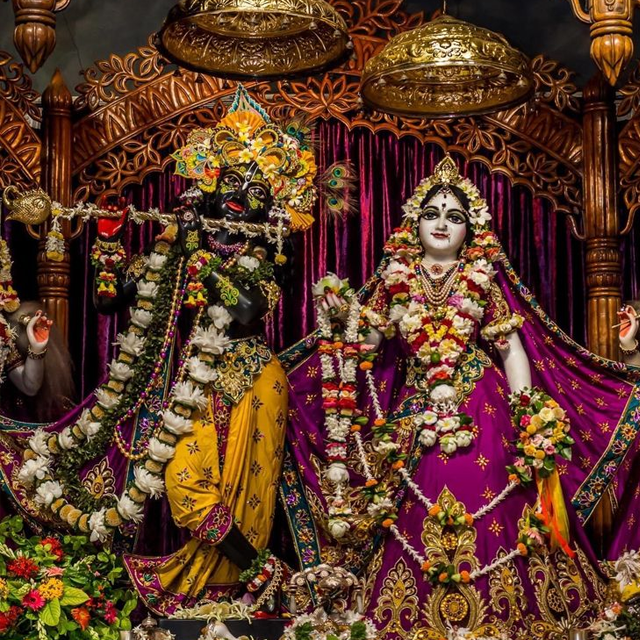
Particularly renowned are his discourses on the Tenth Canto, which describes the transcendental pastimes of Lord Krishna in Vrindavan. His narrations of Krishna's childhood pastimes, the rasa-lila (divine dance), and the gopis' (cowherd maidens') pure devotion are delivered with such love and absorption that listeners often find themselves transported to the spiritual realm of Goloka Vrindavan.
Teaching Categories
The Power of the Holy Names
Krishna Premarupa Dasa teaches that the chanting of the Hare Krishna maha-mantra — Hare Krishna Hare Krishna, Krishna Krishna Hare Hare, Hare Rama Hare Rama, Rama Rama Hare Hare — is the yuga-dharma, the prescribed method for spiritual realization in the current age of Kali. This 16-word mantra, composed entirely of the names of God, directly connects the chanter with the Supreme Person.
He explains that unlike other forms of meditation that require strict external conditions, mantra meditation can be practiced by anyone, anywhere, at any time. The sound vibration of Krishna's names is non-different from Krishna Himself — therefore, chanting is a form of direct association with the Divine that purifies the consciousness, dissolves material attachments, and awakens dormant spiritual love.
His guided kirtan and japa (personal chanting on beads) workshops have introduced thousands of people to the sublime practice of mantra meditation, providing them with a powerful tool for stress relief, mental clarity, and spiritual awakening.
Understanding Karma & Dharma
Krishna Premarupa Dasa provides illuminating discourses on the Vedic laws of karma (action and reaction) and dharma (righteous duty). He explains that every action performed by a living entity generates a corresponding reaction, binding the soul to the cycle of birth and death (samsara). However, when actions are performed as an offering to the Supreme Lord — nishkama karma yoga — they become spiritualized and free the performer from karmic bondage.
His teachings on dharma encompass varṇāśrama-dharma (the system of social organization described in the Vedas), sanātana-dharma (the eternal nature and duty of the soul), and the specific dharmic responsibilities of individuals in various stations of life. He skillfully navigates the complexities of applying these ancient principles to contemporary ethical dilemmas, providing practical guidance on topics ranging from professional ethics to environmental responsibility.
The Science of the Eternal Soul
One of Krishna Premarupa Dasa's most powerful teaching themes is the science of the self (atma-tattva). Drawing from the second chapter of the Bhagavad Gita, he presents a compelling, logical case for the existence of the eternal soul — distinct from the temporary material body.
He explains: "The soul is never born, nor does it ever die. It is not slain when the body is slain." This understanding forms the foundation of all spiritual knowledge and has profound implications for how we view life, death, suffering, and our ultimate purpose. His lectures on this topic have been particularly impactful among young professionals and students grappling with existential questions about identity, purpose, and mortality.
Daily Spiritual Practice (Sadhana)
Krishna Premarupa Dasa emphasizes the vital importance of consistent daily spiritual practice (sadhana) for making tangible progress on the path of Bhakti. He teaches a practical, structured daily routine that includes: early morning rising (brahma-muhurta), chanting a prescribed number of rounds on japa beads, attending or conducting mangala-arati (early morning deity worship), studying scripture (svadhyaya), attending satsang (spiritual association), and offering all daily activities to Lord Krishna.
His "21-Day Bhakti Challenge" program has helped thousands of newcomers establish a consistent spiritual practice by gradually introducing them to the essential elements of devotional life in a supportive, encouraging environment.
Steps to Begin Your Spiritual Journey
1. Study Scripture
Begin with reading Bhagavad Gita As It Is. Let the words of Lord Krishna enter your heart and illuminate your understanding of life's deepest questions.
2. Chant Daily
Begin chanting the Hare Krishna maha-mantra daily. Start with one round on japa beads (108 repetitions) and gradually increase as you experience the transformative power of the Holy Names.
3. Seek Association
Visit your nearest ISKCON temple or devotee community. Spiritual advancement is accelerated by the association of sincere practitioners who inspire and support your journey.
4. Serve Others
Engage in selfless service (seva). Volunteer at temple programs, distribute prasadam, share spiritual knowledge, and let your life become an offering to the Divine.
Frequently Asked Questions
From the Bhagavad Gita
"Abandon all varieties of religion and just surrender unto Me. I shall deliver you from all sinful reactions. Do not fear."— Lord Sri Krishna, Bhagavad Gita 18.66
Have Questions? Reach Out
Krishna Premarupa Dasa and his team welcome your inquiries about spiritual practice, temple visits, or community service opportunities.
Contact Us →